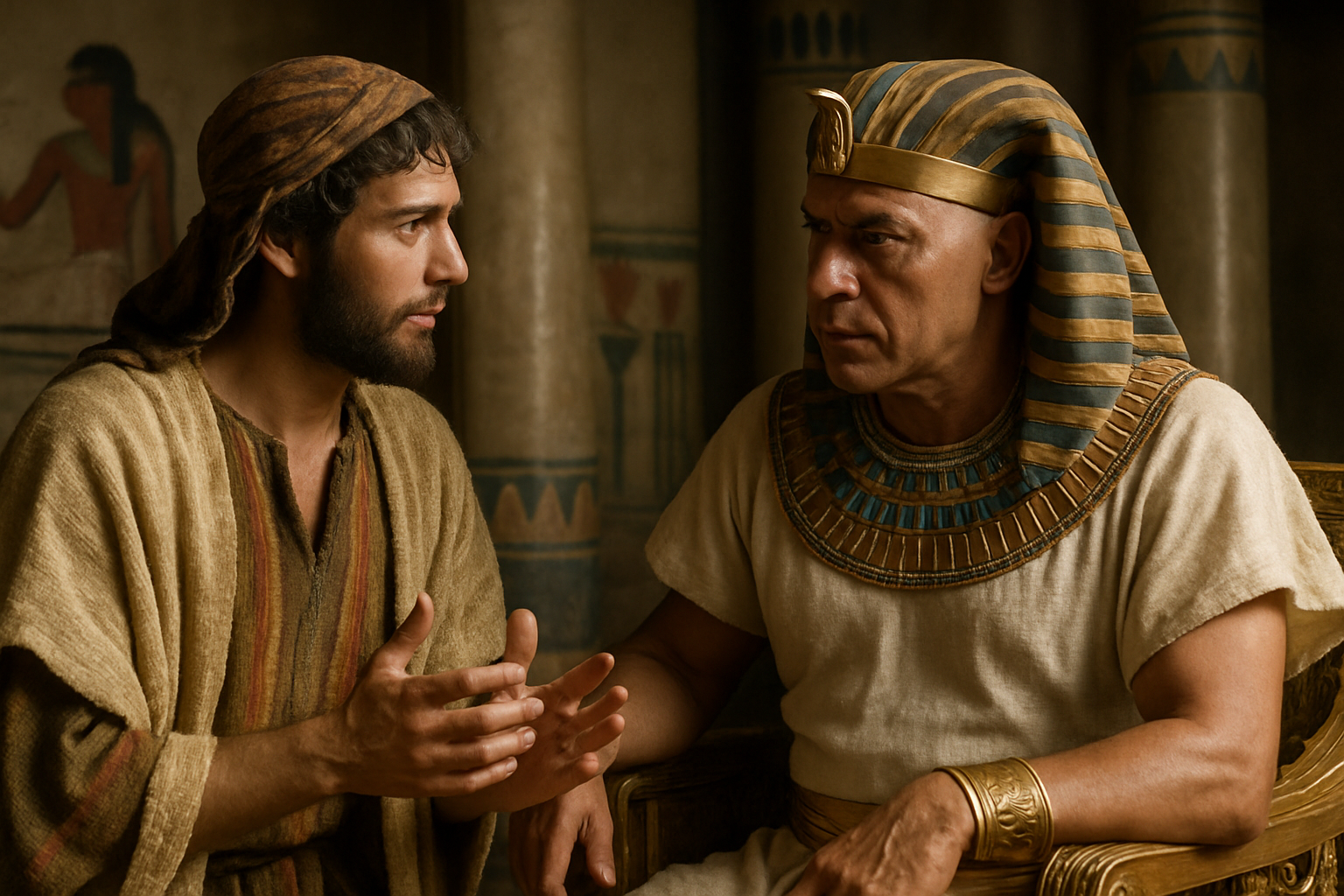
Joseph, the eleventh son of Jacob and Rachel, held his father’s special affection, symbolized by a richly ornamented coat of many colors. From an early age, he stood apart from his ten older brothers, not only because of his cherished garment, but also for the prophetic dreams he shared with unwavering confidence. In these visions, Joseph saw his brothers’ bundles of wheat bowing to his and the sun, moon, and stars paying homage, sowing seeds of both wonder and resentment in the hearts of his kin.
Consumed by envy and anger, Joseph’s brothers plotted his downfall. Initially bent on killing him, they relented and sold him to a caravan of Ishmaelite traders for twenty pieces of silver. To conceal their betrayal, they dipped his beloved coat in goat’s blood and presented it to Jacob as proof of a savage animal’s deed. Distraught, Jacob mourned deeply, believing his favored son had perished, while Joseph found himself bound for the foreign land of Egypt, unaware that God’s plan was unfolding.
Upon arrival, Joseph was sold to Potiphar, captain of Pharaoh’s guard. As a slave, he displayed remarkable integrity and diligence, earning his master’s trust. Potiphar entrusted Joseph with the oversight of his entire household and property, from fields to finances. Under Joseph’s stewardship, each venture prospered, and blessings seemed to follow him: his management skills and faith-inspired wisdom transformed Potiphar’s estate into a model of fertility and provision.
However, Potiphar’s wife became infatuated with Joseph’s charisma and moral character. Despite her repeated advances, he refused, unwilling to betray his master or compromise his principles. Scorned, she falsely accused Joseph of assault, fabricating a story that led to his abrupt arrest. Bound and humiliated, he was thrown into Pharaoh’s prison, destined to languish away from the prosperity he had built.
Yet prison did not diminish Joseph’s favor with God. He continued to exhibit leadership and compassion, earning the warden’s confidence and authority over all inmates. In this dark setting, he tended to fellow prisoners, offering counsel and organizing household duties. His impeccable conduct distinguished him, even within the bleak confines of confinement.
Among those imprisoned were the chief cupbearer and the baker of Pharaoh. Both men were troubled by perplexing dreams and lamented their fates. Joseph, called upon for insight, explained that the cupbearer’s symbol of a vine and goblet foretold his restoration, while the baker’s basket of birds signified his execution. The dreams came to pass exactly as interpreted: the cupbearer was returned to his office, but the baker was hanged.
Two full years later, Pharaoh himself experienced a pair of disturbing dreams: seven healthy cows devoured by seven gaunt beasts, and seven abundant ears of grain swallowed by seven withered stalks. No advisors could decipher their meaning. The cupbearer then remembered Joseph’s God-given gift and urged Pharaoh to summon him. Joseph stood before the king, attributing the revelation to God alone.
Joseph revealed that Egypt would endure seven years of unprecedented abundance followed by seven years of severe famine. He recommended appointing a wise steward to oversee the collection and storage of surplus harvests. Impressed by his insight, Pharaoh bestowed upon him his signet ring, finest garments, and a chariot, declaring Joseph second-in-command over the land. Joseph set about organizing vast granaries throughout Egypt to shelter the nation in lean years.
When the famine struck, it spread across the region, afflicting even the land of Canaan where Jacob and his family dwelled. Jacob sent his sons to Egypt to procure grain. They bowed before Joseph in homage, fulfilling his earliest dream, though they did not recognize him. Joseph, however, concealed his identity and interrogated them, accusing them of espionage before breaking their resolve.
Joseph imprisoned Simeon until they returned with their youngest brother, Benjamin, as proof of their honesty. Reluctantly, Jacob consented, and the brothers returned with Benjamin. Joseph hosted a lavish feast in their honor. Yet, when they departed, a silver cup was mysteriously placed in Benjamin’s sack. Discovery of the cup threatened Benjamin’s life and plunged the brothers into despair.
Moved by their anguish, Joseph revealed himself through tears. He embraced his brothers, assuring them of his forgiveness and explaining that what they intended for harm, God had used for good—to preserve many lives. He sent for his entire family, providing for their safe passage, and made his peace with those who once betrayed him.
Jacob, overjoyed, journeyed to Egypt with all his offspring, settling in the region of Goshen. There, father and son were reunited under the shelter of Pharaoh’s protection. The saga of Joseph endures across millennia as a testament to resilience, divine providence, and mercy. It reminds us that suffering can yield salvation, betrayal can foster reconciliation, and faith anchored in purpose sustains communities through every season.