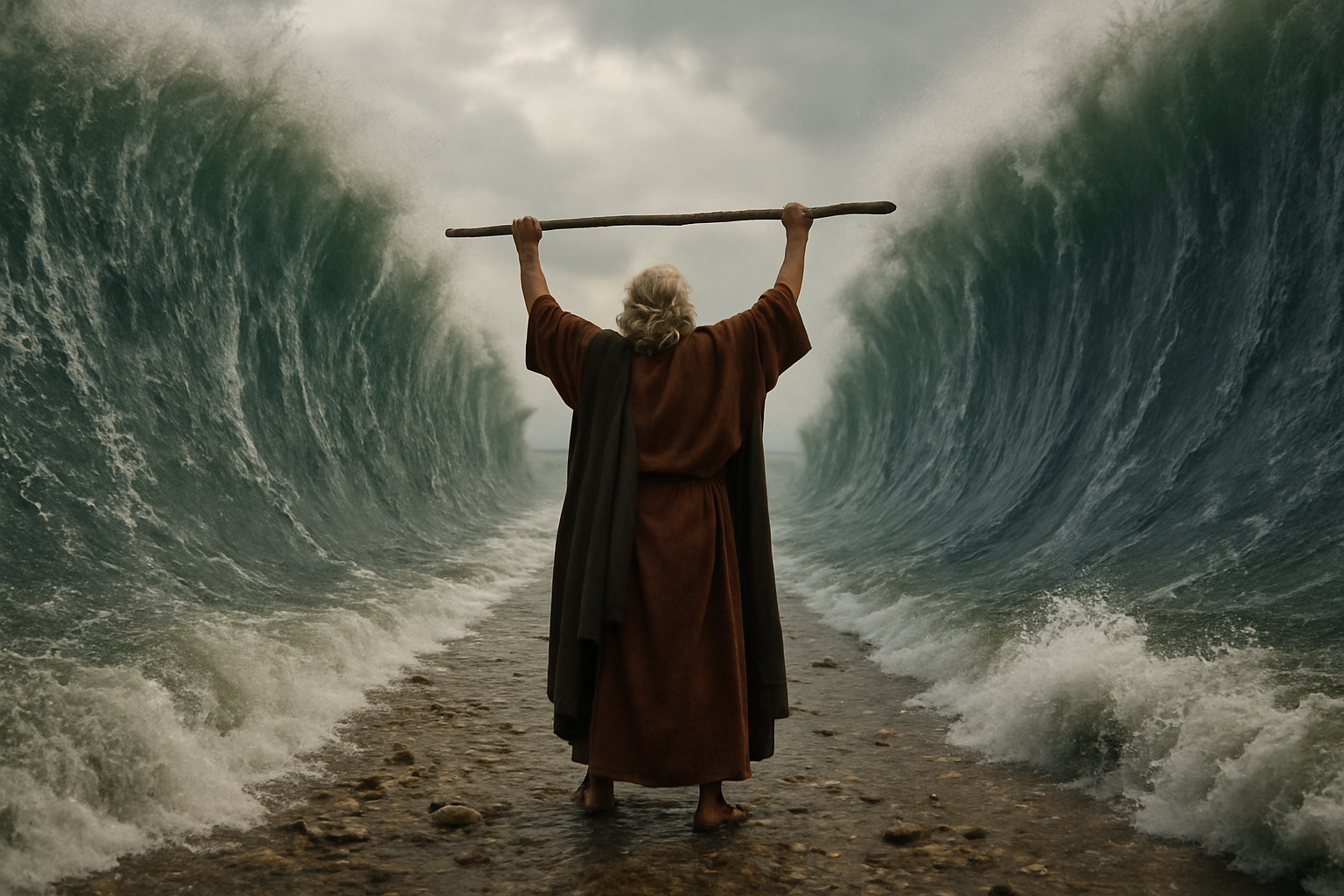
After ten devastating plagues compelled Pharaoh to release the Israelites, Moses led the people out of Goshen into the wilderness, carrying only their provisions and the shelter of cloth and leather. No sooner had they set forth than Pharaoh hardened his heart once more, dispatching his elite chariots and cavalry to pursue the fleeing Hebrews. Trapped between the approaching army and the expanse of the Red Sea, the Israelites found themselves in a perilous predicament.
Panic gripped the camp. Mothers clutched their children, and fathers tightened their grips on their staffs, fearing the dread doom of the desert. They turned to Moses and cried, “Was it because there were no graves in Egypt that you brought us to die in the wilderness? Why did you not leave us there to serve the Egyptians?” But Moses, with unwavering faith, answered, “Do not be afraid. Stand firm and see the deliverance the Lord will bring you today. The Egyptians you see today you will never see again. The Lord will fight for you; you need only to be still.”
Then the Lord spoke to Moses: “Why are you crying out to me? Tell the Israelites to move on. Raise your staff and stretch out your hand over the sea to divide the water so that the people may go through on dry ground.” Obediently, Moses lifted his staff, and a strong east wind began to blow all night, driving back the waters and creating towering walls of water on either side. The seabed emerged as a dry path, wide enough for the entire assembly to pass through safely.
With hearts pounding and eyes filled with awe, the Israelites marched forward. The path was firm beneath their sandals, and even the livestock followed without hesitation. The walls of water loomed like glass, reflecting the torchlight and morning sun in shimmering hues. Every step echoed the certainty of God’s presence and protection as mothers comforted frightened children and elders praised the Lord under their breath.
When the last Israelite reached the far shore, the Lord said to Moses, “Stretch out your hand over the sea so that the waters may flow back over the Egyptians.” Moses obeyed once more. The east wind ceased, and the waters surged back, collapsing upon the chariots, horsemen, and all of Pharaoh’s army in swift, divine retribution. Not a soul escaped; the once-mighty host of Egypt was swallowed by the sea.
As the waters settled, silence fell over the shore, broken only by the cries of terror from the Egyptians and the victorious shouts of the Israelites. Miriam, the prophetess and sister of Moses, took a tambourine and led the women in song: “Sing to the Lord, for he is highly exalted. Both horse and driver he has hurled into the sea.” Then Moses and the people of Israel worshiped the Lord with songs of praise, recounting how He had triumphed gloriously.
This miracle became the defining moment for the fledgling nation of Israel. No longer slaves in Egypt, they had passed through death’s shadow unharmed, marked by God’s steadfast love. The crossing of the Red Sea stood as eternal proof that when God opens a path, no obstacle—be it sea, mountain, or army—can stand against His will.
As they journeyed onward toward Mount Sinai, the memory of the sea divided remained vivid: a testament that faith in the Almighty transforms fear into victory and imprisonment into freedom. Each recitation of this story reminded the people that their God commands the waters and guides their destiny, and that in His hands, they would always find a way through.